
How many porta potties do I need for a construction jobsite?
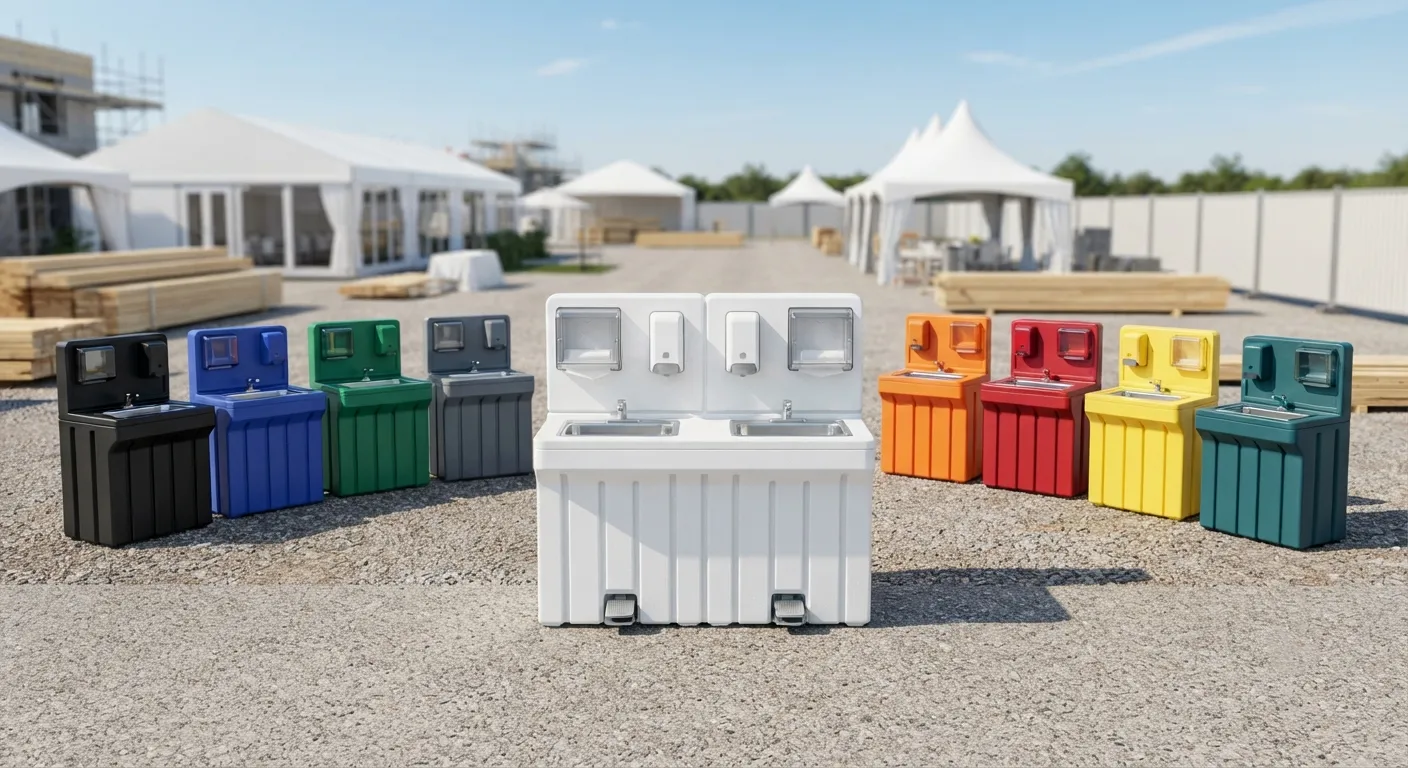
OSHA 1926.51(c) sets the baseline: 1 toilet facility for 20 workers or fewer, 1 toilet seat and 1 urinal per 40 workers once you pass 20, and 1 toilet seat and 1 urinal per 50 workers at 200 or more. A 12-person residential remodel crew in Reno needs exactly one standard porta potty rental. A 60-person commercial job crosses into the 40-worker bracket and needs two seats plus urinal capacity. Don't guess at the split; a bad headcount estimate on a multi-month job means service calls and unhappy crews. Larger construction site services jobs often add a handwashing station rental too, since OSHA 1926.51(a)(1) requires potable water at all places of employment. If your crew works with paints, coatings, or insecticides, OSHA 1926.51(f)(1) requires washing facilities beyond a basic toilet setup, and that changes your count. Check the OSHA Portable Toilet Requirements page before you finalize a bid, and use the How Many Porta Potties Do I Need worksheet logic below for the exact bracket math.
What is the OSHA bracket table for jobsite crews?
| Crew size | Toilet seats required | Urinals required |
|---|---|---|
| 1 to 20 | 1 | 0 |
| 21 to 60 | 1 per 40 workers | 1 per 40 workers |
| 61 to 200 | scales per 40-worker bracket | scales per 40-worker bracket |
| 200+ | 1 per 50 workers | 1 per 50 workers |
A 35-person framing crew in Reno falls in the 21-60 bracket and needs two full facilities. Round up, not down; OSHA 1926.51(c) is a floor, not a target. Multi-week jobs should also budget for porta potty rental per day versus monthly porta potty rental pricing, since a longer job almost always pencils out cheaper per day on a monthly rate. Pair your toilet count with temporary fence rental if the site sits near a sidewalk or active roadway; OSHA 1926.202 requires barricades that meet ANSI D6.1 standards around hazards, and a fenced perimeter also keeps unit access controlled.
How many porta potties do I need for an event?
Events run on headcount and hours, not worker brackets. The standard planning ratio is one unit per 50 guests for a 4-hour event with no alcohol. Add a unit for every 2 additional hours, and double your alcohol-service ratio since beer and wine drive bathroom trips up sharply.
| Guest count | 4 hours, no alcohol | 4 hours, with alcohol | 8 hours, with alcohol |
|---|---|---|---|
| 100 | 2 units | 3 units | 4 units |
| 250 | 5 units | 7 units | 9 units |
| 500 | 10 units | 13 units | 17 units |
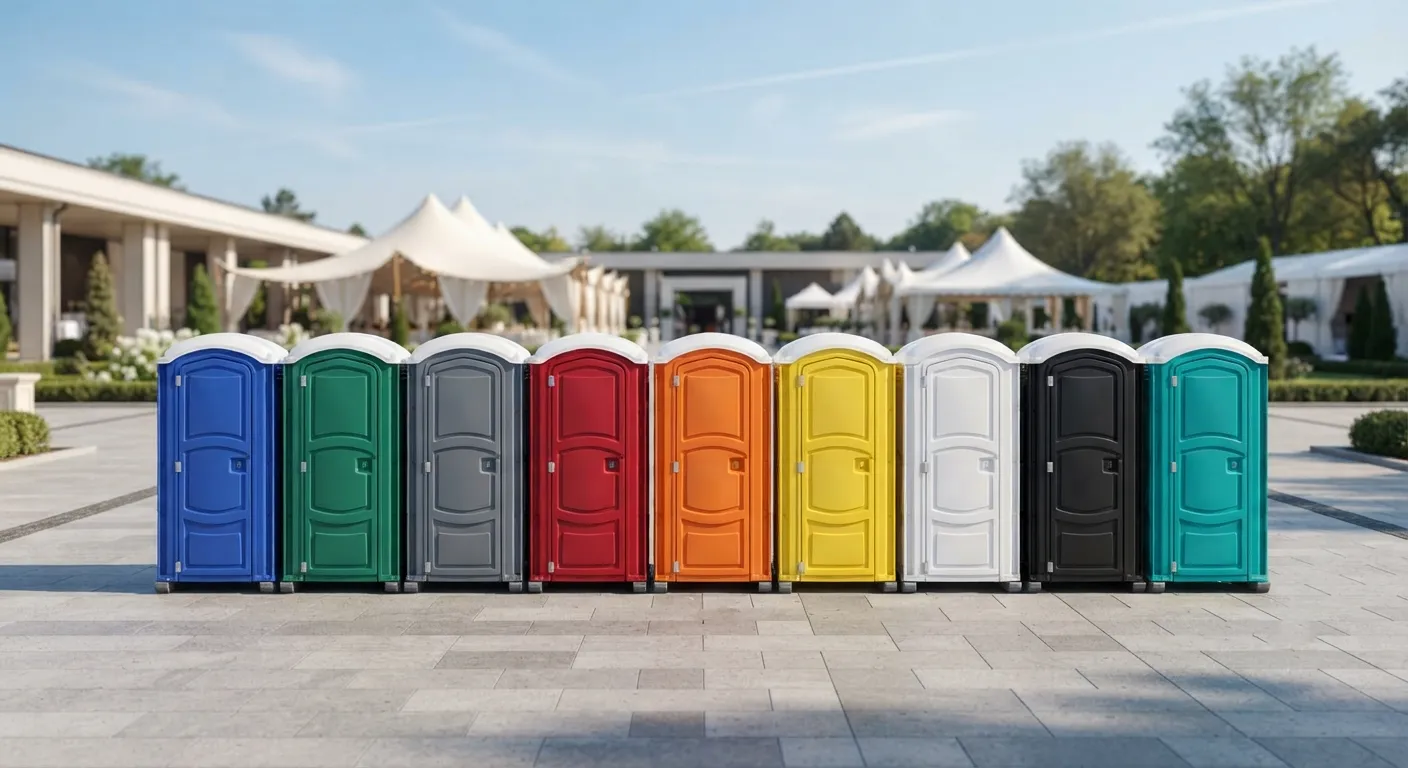
A 300-guest wedding reception running 6 hours with a bar needs roughly 8 units, plus one ADA-accessible unit per ADA Standards section 213.2, which requires at least 5 percent of a cluster to be accessible with a minimum of one unit regardless of cluster size. Browse wedding restroom rental or event restroom rental for packages built around this math, and check deluxe flushable porta potty options if your event calls for a nicer finish than a standard unit.
How does alcohol change my porta potty count?
Alcohol increases bathroom trips, plain and simple. A dry 4-hour event needs one unit per 50 guests; add a beer and wine bar and that ratio tightens toward one per 35 to 40 guests. A 200-guest fundraiser with an open bar should plan for 5 to 6 units instead of the 4 a dry event of the same size would need. Multi-day festivals compound this further, since service intervals matter as much as unit count. ANSI/PSAI Z4.3 sets a baseline service interval of once weekly for up to 10 users over a 40-hour week, but a 3-day festival with alcohol service needs daily servicing, not weekly, to keep units usable. Check festival restroom rental or concert restroom rental for high-traffic event planning, and consider a restroom trailer rental once your count climbs past 10 to 12 standard units, since trailers consolidate plumbing and often service faster per guest than a scattered row of standalone units.
How many cubic feet and tons does a dumpster hold?
Dumpster sizing runs on cubic feet of volume and tons of weight capacity, and the two numbers don't always scale together. A 10 yard dumpster measures roughly 12 feet long and holds about 10 cubic yards, which converts to 270 cubic feet. So how many cubic feet in a 10 yard dumpster and how many feet is a 20 yard dumpster in real terms? A 20 yard dumpster runs about 22 feet long, which answers how many feet is a 20 yard dumpster, and holds around 540 cubic feet, answering how many cubic feet in a 20 yard dumpster; it's typically rated for 2 to 3 tons depending on debris type. How many tons can a 30 yard dumpster hold and how many tons does a 30 yard dumpster hold in practice? A 30 yard dumpster can hold roughly 3 to 4 tons and about 810 cubic feet. As for how many tons does a 40 yard dumpster hold, it holds close to 1,080 cubic feet and is often rated for 4 to 5 tons on mixed construction debris. Heavier materials like concrete or shingles hit the tonnage limit long before the cubic footage fills up, so match the dumpster to your material, not just your visible pile size. Check dumpster sizes and dimensions for the full comparison, dumpster weight limits before you load anything dense, and what cannot go in a dumpster before you fill it with anything hazardous. A roll-off delivery needs about 60 feet of straight clearance behind the truck, so measure your driveway or lot access before booking a roll-off dumpster rental.
Should I combine dumpster and porta potty rentals for one project?
Yes, most Reno contractors book both together to cut delivery trips and simplify billing. A remodel crew running a 10 yard dumpster rental alongside a standard toilet is common on residential jobs; larger builds pair a 30 yard dumpster rental or 40 yard dumpster rental with two or more toilets and a fenced perimeter. Reno Porta Pros delivers both on one truck route when scheduled together, which trims the delivery fee compared to booking separately. If space is tight, a storage container rental can hold tools and materials off the ground while the dumpster handles debris, keeping the whole site organized under one plan instead of scattered equipment drops. Home projects often start smaller; see home renovation porta potty for typical single-unit setups before scaling up.
What does it cost to rent the right number of units?
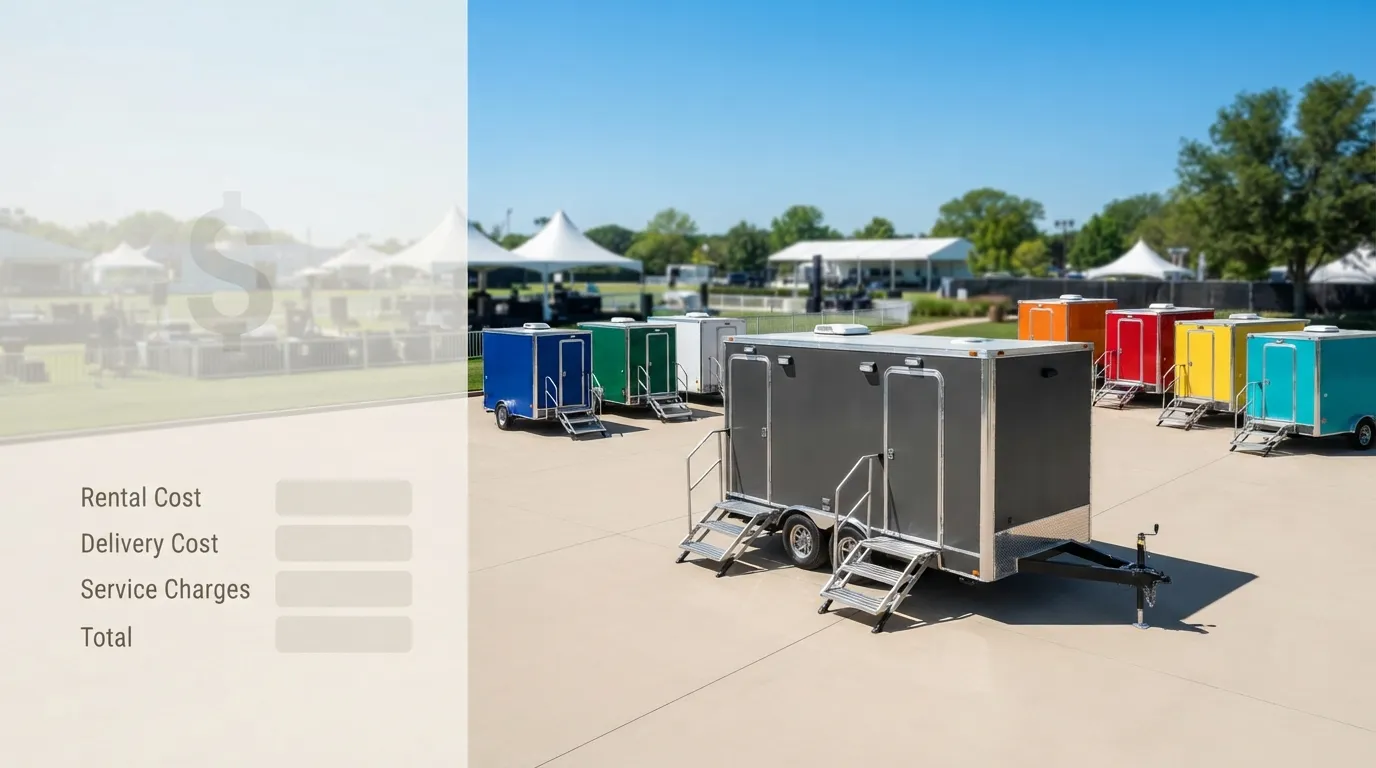
Pricing depends on unit type and rental length, and longer terms always cost more in total even though the daily rate drops. A standard unit runs $100 to $350 a day, $130 to $500 a week, and $125 to $325 a month. An ADA-accessible unit runs $200 to $400 a day or $120 to $240 a week. Deluxe flushable units run $85 to $1,200 a day depending on finish level, or $150 to $290 a week. Delivery fees run $100 to $500 for a single day and $50 to $150 for a week-long booking. A weekend rental for a standard unit typically lands around $125 to $400, priced separately from the weekly rate since weekend pricing is a short-term premium. Full breakdowns live at porta potty rental cost and porta potty rental per day, with monthly job pricing at monthly porta potty rental. Contractors near Sparks, 9.2 miles east of Reno, and crews out toward Verdi, 9.6 miles west, use the same bracket math to size their order before requesting delivery.
How many porta potties for 100 guests?
Plan on 2 units for a 4-hour dry event, or 3 units if you're serving alcohol. Add a third unit regardless if the event runs past 5 hours. This matches the standard one-per-50-guest ratio used across most Reno event bookings.
How many porta potties for a 50 person job site?
That crew sits in OSHA's 21-60 bracket under 1926.51(c), requiring one toilet seat and one urinal per 40 workers. A 50-person crew needs two full facilities, not one, since it exceeds the 20-worker single-unit threshold.
Do I need an ADA-accessible unit at my event?
Yes, if you're clustering multiple units. ADA Standards section 213.2 requires at least 5 percent of a cluster to be accessible, with a minimum of one unit regardless of how small the cluster is. Check ADA accessible porta potty for specs.
How many tons does a 20 yard dumpster hold versus a 30 yard?
A 20 yard dumpster typically holds 2 to 3 tons; a 30 yard dumpster holds roughly 3 to 4 tons. Actual capacity depends heavily on material density, since concrete and shingles hit weight limits before the bin visually fills.
How often do porta potties need servicing during a multi-day event?
ANSI/PSAI Z4.3 sets a baseline of once weekly for up to 10 users over 40 hours, but multi-day festivals with alcohol service need daily servicing to stay usable. Check how often are porta potties cleaned for details.
Can Reno Porta Pros deliver dumpsters and toilets on the same trip?
Yes, scheduling both together on one delivery route is common and often reduces total delivery fees. This works well for job sites already running a construction dumpster rental alongside standard toilets.
Next step
Get a delivery date
Tell us the address, the dates and the headcount. We size the order and confirm the route.