
How many restrooms does a county fair actually need?
Start with attendance at peak hour, not average daily turnout, because fairs spike hard around headline events and food court rushes. OSHA 1926.51(c)(1) sets the baseline most planners still reference: one toilet facility for 20 workers or fewer, scaling up as headcount grows, and fair organizers use the same ratio logic for public crowds. For a fairground of a few thousand people, that means clusters of standard portable toilets spread across midway, grandstand and food court zones, not one bank of units by the front gate. ADA Standards section 213.2 requires at least 5 percent of any cluster to be accessible, never fewer than one unit, so a bank of 15 standard units needs an ADA accessible porta potty in the mix. We plan around how many porta potties do I need as a starting worksheet, then adjust for stage schedules and beer garden hours, which pull crowds unevenly across the grounds. Reno fairs with grandstand seating need extra units near bleacher exits, since that is where lines back up fastest once a show lets out. For multi-day fairs, we set ANSI/PSAI Z4.3 service intervals tighter than the weekly baseline, because a fairground sees far more than 10 users per unit over a 40 hour week.
Where should restrooms go on a fairground?
Restrooms belong at the edges of high-traffic paths, never blocking them, and close enough to the midway that a line does not eat into ride queues. Ground surfaces need to be stable and slip resistant under ADA Standards section 302.1, which matters on fairgrounds with gravel lots or grass fields that turn soft after a watering truck passes. Every unit needs a 60 inch turning circle nearby per ADA Standards section 304.3.1, so units can't sit wedged against fencing or vendor booths. We follow a porta potty placement guide that puts clusters near food vendors, grandstands and parking, each with its own path back to a main walkway. For fairs that run day and night, lighting matters: OSHA 1926.56(a) sets minimum illumination for work areas, and we treat restroom zones the same way after dark. Fencing around generator and service areas follows OSHA 1926.202, using barricades rated to ANSI D6.1, and we can pair that with temporary fence rental or chain link temporary fence to keep foot traffic away from delivery routes. Larger fairs in Reno often add a restroom trailer rental near the grandstand for VIP ticket holders, stepping up from standard units without adding another long line. If your fairground sits near Sparks, 9.2 miles east of Reno, or Sun Valley, 7.7 miles northeast, we still run the same setup and pickup schedule, no separate logistics plan needed.
What restroom options work best for a multi-day fair?
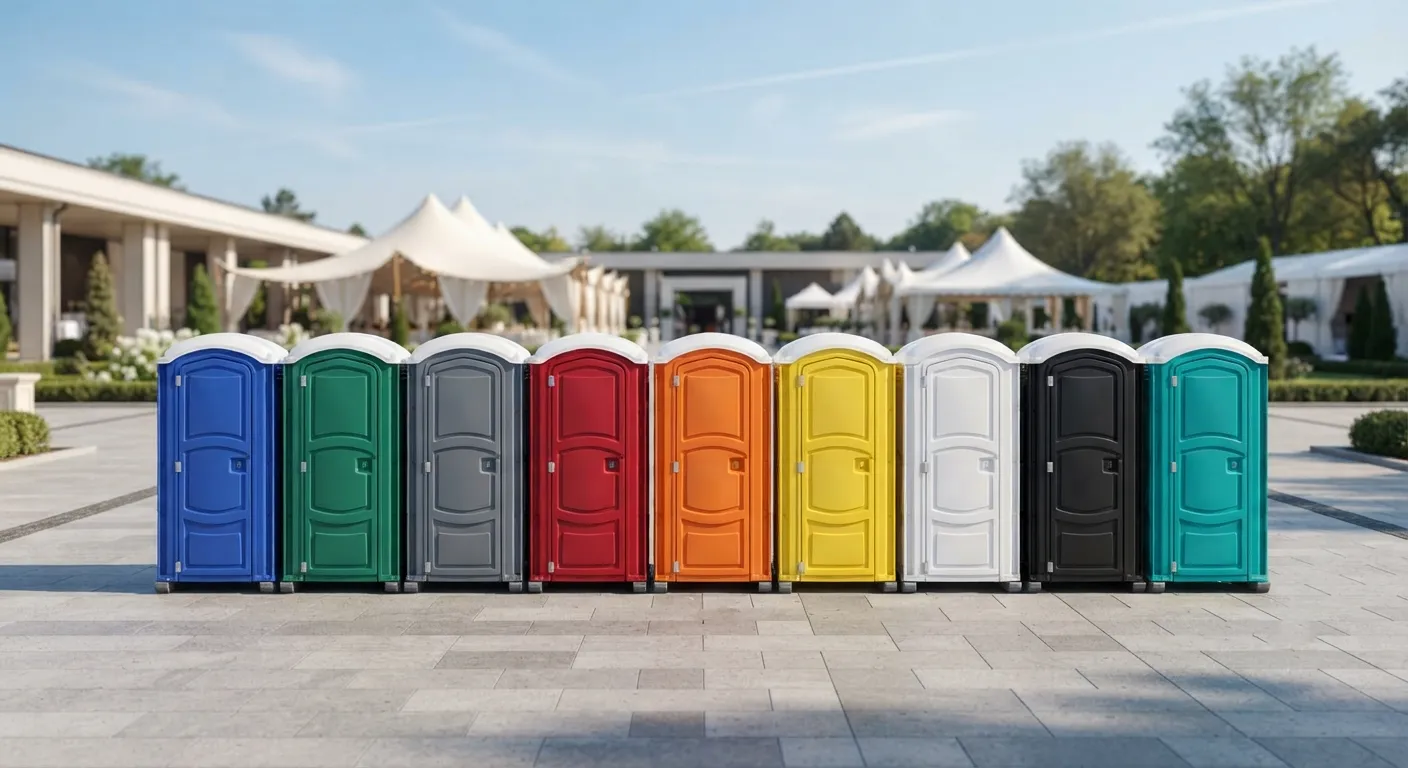
Standard units handle the bulk of daily traffic, but multi-day fairs benefit from mixing in a few upgrades. A deluxe flushable porta potty works well near grandstands or hospitality tents, giving VIP guests a flush handle instead of a standard tank unit. For fair staff and vendors handling food prep, handwashing station rental units satisfy 29 CFR 1910.141(d)(2), which requires soap and towels or a hand drying device at wash stations; hand sanitizer alone does not meet that standard. If any vendor booths apply paint or coatings to signage or equipment on site, OSHA 1926.51(f)(1) requires washing facilities for that specific work, separate from general fairgoer restrooms. Food vendors generating grease need a grease trap pumping plan too, since interceptors get serviced once fats, oils, grease and solids reach 25 percent of liquid depth. For trash from food courts and midway vendors, a roll-off dumpster rental or two keeps grounds crews from hauling bags across the fairground all day; check what cannot go in a dumpster before fair week so vendors know the rules. Overnight security and lighting often pair with a light tower rental near restroom clusters and parking lots. We serve fairgrounds around Reno and into Golden Valley, 7.6 miles north, with the same delivery and pickup windows.
| unit | duration | typical price |
|---|---|---|
| standard | event | $400 |
| ada | week | $185 |
| deluxe | week | $250 |
| trailer | event | $3500 |
How far in advance should we book fair restrooms?
Book as soon as your gate count and layout are set, ideally weeks ahead for a multi-day county fair. Fairground season books fast across the Reno area, and grandstand-adjacent placements go first. A request a quote call early locks in delivery timing before the schedule fills.
Do we need a permit for restrooms on fairground property?
Placement rules depend on whether units sit on public right of way versus private fairground land, and that needs confirming with the city. Check our porta potty permit requirements page, then confirm with Reno directly before finalizing your site map.
How often are units serviced during a multi-day fair?
Service scales with attendance, not the standard weekly interval. High-traffic fairs need daily or twice-daily pumping, especially near food courts. See how often are porta potties cleaned for how we adjust routes across fair days.
Can we get restrooms for just the fair's opening weekend?
Yes, weekend rates apply if your fair runs Friday through Sunday. Standard units run in the $125 to $400 range for a weekend, and we can scale that up or down as attendance numbers firm up closer to the date.
What happens if a unit runs low mid-fair?
Call us and we route a truck same day when possible. Multi-day fairs get a standing service schedule, but unexpected crowd surges happen. Our emergency porta potty rental line covers exactly this kind of mid-event gap.
Next step
Get a delivery date
Tell us the address, the dates and the headcount. We size the order and confirm the route.