
How Often Does a Septic Tank Need Pumping?
Every 3 to 5 years is the standard rule for a typical residential tank, and that range holds for most homes in Reno. Tank size and household size are the two things that move that number in either direction. A bigger family generates more solids and needs more frequent visits, similar to how a busy job site needs how many porta potties do i need worked out ahead of time. A smaller household with a larger tank might stretch closer to the 5 year mark. If you've never had the tank pumped and you're not sure when the last service happened, that's worth flagging when you request a quote. Grease traps run on a different clock entirely: those get pumped once fats, oils, grease and solids reach 25 percent of the liquid depth, which can happen a lot faster than a residential tank fills. If your property doesn't have septic at all, or the system's down for repair, a holding tank rental covers the gap. For restaurants and commercial kitchens in Reno, see grease trap pumping for that separate schedule. Homes on well water or older systems sometimes need closer attention, the same way a farm and agricultural restrooms setup needs its own service plan. Check septic tank warning signs if you're unsure whether you're due. We also cover how often to pump a septic tank in more depth if you want the full breakdown by household size.
What Decides How Often You Need Septic Pumping?
Tank size and how many people live in the house are the biggest factors, full stop. A family of six on a 1,000 gallon tank fills it faster than a couple on the same tank. Garbage disposal use matters too, much like a home renovation porta potty plan depends on how many people are actually on site. Grinding food waste into the system adds solids that would otherwise go in the trash, and that shortens the interval between pumpings. Water usage plays in as well. Long showers, frequent laundry loads and leaky fixtures all push more liquid through the system, and more liquid means less time for solids to settle before the tank needs attention. Soil conditions around Reno vary block to block, and a drain field that's struggling to absorb effluent will back symptoms up into the house faster than a healthy one will, not unlike how porta potty placement guide affects how fast a rented unit fills. If you've added a bedroom, finished a basement, or the household grew since the tank was installed, the tank might now be undersized for daily use. That's a conversation worth having before a small problem turns into a backed up line, the kind of planning question we also answer on porta potty rental checklist. For newer construction or homes without documented septic history, our septic tank cleaning service includes an inspection so you know what you're working with going forward, not just today.

What Are the Warning Signs a Septic Tank Needs Pumping?
Slow drains, gurgling pipes, and standing water near the drain field are the three most common signs something's off. Slow drains in multiple fixtures at once, not just one sink, usually point to the tank rather than a single clogged pipe. Gurgling sounds when water drains are the system telling you air is getting trapped somewhere it shouldn't, a problem separate from odor complaints covered on do porta potties smell. Standing water or unusually green, spongy grass over the drain field means effluent isn't being absorbed the way it should, and that's often a sign the tank is too full to let solids settle properly before liquid moves out. Sewage odor indoors or in the yard is the most obvious sign, and it means the problem has likely been building for a while already, much like the buildup schedule described in how often are porta potties cleaned. If any of this sounds familiar, don't wait. Same day and emergency septic response is available through emergency septic service, and catching it before a backup reaches the house saves a lot more than the cost of the pump-out itself. A full breakdown of what to watch for lives on our septic tank warning signs page, worth a look even if things seem fine right now.
What Does a Septic Pumping Service Include?
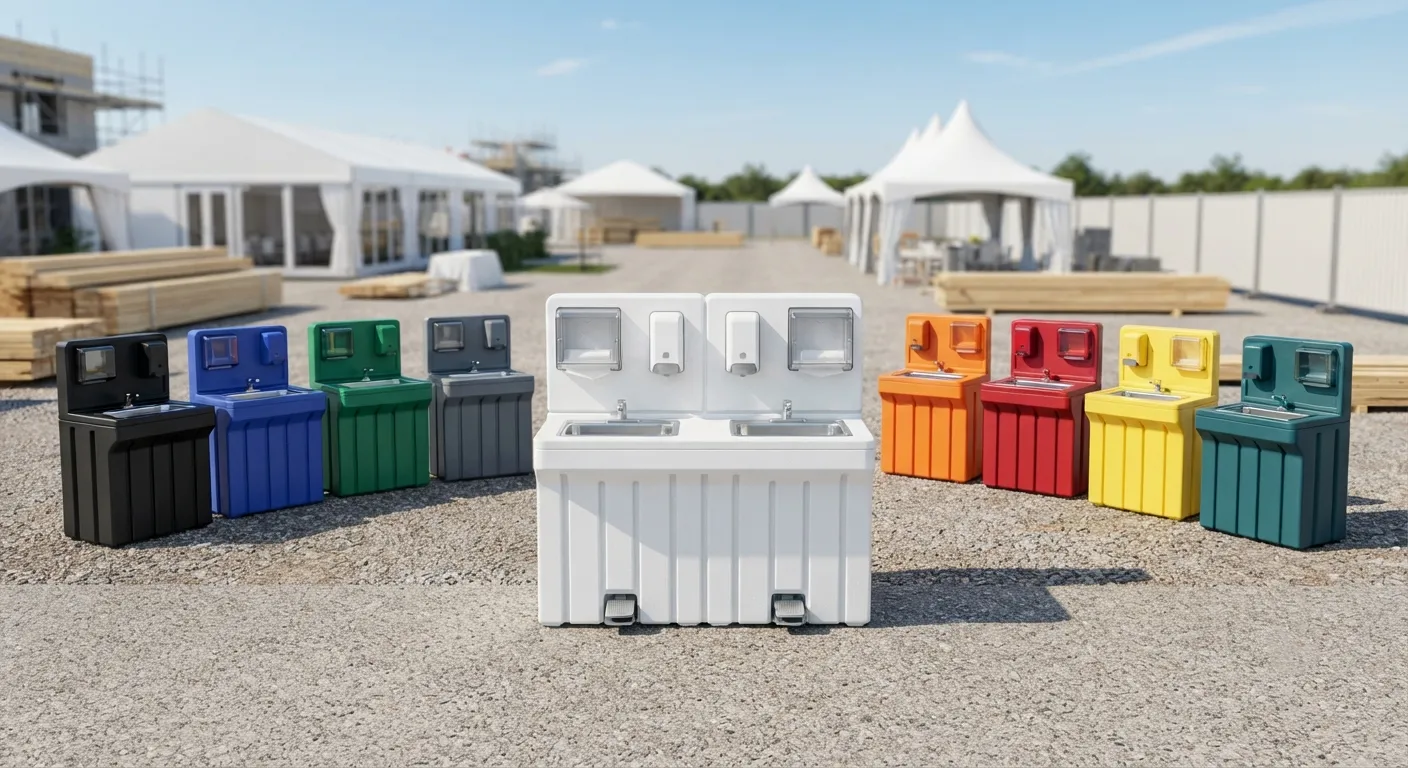
A standard visit includes locating and opening the tank access, pumping out solids and liquid, and a basic check of tank condition while we're in there. We're not just showing up with a hose and leaving, the same standard we hold for a standard porta potty rental or a deluxe flushable porta potty delivery. The crew checks baffles, looks for cracks or signs of a failing drain field, and lets you know if something needs follow-up before it becomes an emergency call. For homes without documented septic records, we can also flag whether the tank looks undersized for the household, which matters if you're planning an addition or a bigger family down the line. Access matters here: if the tank lid is buried or hasn't been uncovered in years, that adds time to the visit, so mentioning that upfront when you book helps us send the right crew with the right gear, the same detail that matters for porta potty rental per day delivery scheduling. Commercial kitchens need a different service entirely, covered separately under grease trap pumping, since grease interceptors get judged by fats, oils, grease and solid buildup rather than a fixed pumping schedule. If your property runs sanitation for a job site instead of a home, pair septic service with portable toilet rental or a full construction site services setup so crews aren't waiting on either.
How Much Does Septic Tank Pumping Cost?
Day-rate septic pumping in Reno runs in the range below, and most single-visit jobs land in the middle of that band depending on tank size and access.
| service | duration | low | typical | high |
|---|---|---|---|---|
| septic pumping | day | 150 | 250 | 300 |
| septic pumping | weekend | 50 | 100 | 150 |
Tank size drives most of the cost difference, similar to how unit type drives the numbers on monthly porta potty rental. A 1,000 gallon tank pump-out generally sits at the lower to middle end of the day-rate range, while larger tanks or tanks that haven't been serviced in years, and therefore hold more compacted solids, push toward the higher end. Difficult access, like a buried lid or a tank set under a deck, adds time and can move the price up too, the same way tight site access affects a roll-off dumpster rental delivery. Weekend service carries its own rate structure since it's a shorter, more urgent booking window rather than a scheduled weekday visit. For a side by side on what drives the number up or down, see septic tank pumping cost. If you're comparing this against portable sanitation for a temporary need instead, porta potty rental cost breaks down that separate pricing structure.
Can You Get Emergency Septic Pumping in Reno?
Yes, emergency and same-day septic response is available in Reno when a tank backs up or a line fails without warning. A failing septic system doesn't wait for a convenient afternoon, and neither do we, the same urgency behind our emergency porta potty rental dispatch. Reno Porta Pros dispatches for backups, overflowing tanks, and drain field failures that can't sit until next week. If the failure means the household has no working toilet in the meantime, a temporary fix like holding tank rental or a fast portable restroom rental placement keeps the house functional while the tank gets pumped and inspected. Properties further out from central Reno, including porta potty rental in Sparks, NV at 9.2 miles east or porta potty rental in Verdi, NV at 9.6 miles west, are within normal response range, and we also cover porta potty rental in Sun Valley, NV, porta potty rental in Mogul, NV, and the other communities listed under service areas. For the fastest possible dispatch, call rather than submit a web form, though contact has both options if you want to see response windows in writing first. Full detail on how emergency dispatch works is on the emergency septic service page.
How much does it cost to pump a 1,000 gallon septic tank?
A 1,000 gallon tank generally falls within the standard day-rate range for septic pumping in Reno, with the exact number depending on access and how long it's been since the last service. See the table above, or septic tank pumping cost for a fuller breakdown by tank condition.
How often should a septic tank actually be pumped?
Every 3 to 5 years for a typical residential tank, driven mainly by tank size and household size. Heavy water use or a garbage disposal can shorten that window. Check how often to pump a septic tank for specifics tied to your household size.
What happens if I ignore septic warning signs?
Ignoring slow drains or yard odor usually ends in a backup inside the house, which costs more to fix than a scheduled pump-out ever would. See septic tank warning signs for the full list of what to watch.
Is a holding tank different from a septic tank?
Yes. A holding tank stores wastewater for later removal and has no drain field or treatment process, unlike a septic system. It's a temporary fix, not a permanent one. Details are on holding tank rental.
Do you pump grease traps too?
Yes, grease interceptors get pumped once fats, oils, grease and solids reach 25 percent of the liquid depth, a different schedule than residential septic. See grease trap pumping for commercial kitchen service.
Can you respond same day if my septic system backs up?
Yes. Reno Porta Pros offers same-day and emergency septic response across Reno and nearby communities. Call ahead for the fastest dispatch, or check emergency septic service for details on coverage and response.
Next step
Get a delivery date
Tell us the address, the dates and the headcount. We size the order and confirm the route.