
Where Should a Porta Potty Go on a Job Site?
Start with the ground. A standard unit runs about 44 by 48 inches at the base and stands close to 92 inches tall, so it needs a pad that will not sink after rain. Reno Porta Pros looks for compacted gravel or concrete over soft dirt, especially on sites near Mogul, 5.9 miles southwest of downtown Reno, where clay soil holds water. Keep units away from soft slopes and drainage paths, a rule that applies whether you're running a porta john rental or a full portable restroom rental setup. For crews, OSHA 1926.51(c) sets the ratio at one toilet for 20 workers or fewer, so placement has to serve that whole group without a long walk. If you are staging several units, our porta potty placement guide pairs well with the how many porta potties do I need breakdown for headcount math. Service access matters too: leave a path wide enough for the pump truck, since a tight alley or a locked gate turns a five-minute stop into a delay for the next stop on the route, and it's worth checking our portable toilet rental overview or the porta potty rental cost page before you lock in a layout.
Are There Placement Rules for the Public Right of Way?
Placement in the public right of way in Reno needs confirming with the city before you set anything on a curb, sidewalk or street shoulder. We are not going to guess at a specific ordinance number here, but we can tell you what tends to get checked: clearance for pedestrians, sightlines at intersections, and access for emergency vehicles. If your event or job site touches a sidewalk in Reno, call the city first and get the placement approved in writing. This is a different question from a temporary fence rental around the unit, which is often required once a toilet sits close to a travel lane, and a chain link temporary fence is the most common choice for that edge. For ADA-compliant placement, ADA Standards section 213.2 requires that where single-user units are clustered, at least 5 percent, and never fewer than one, must be accessible, with a 60 inch turning circle under section 304.3.1 and a clear route width of 36 inches under section 403.5.1, details we also cover on the ADA restroom requirements page.

Does a Dumpster Placement Permit Cost Anything?
A dumpster placement permit cost varies by city and is not something we will invent a number for here. What we can say: if a roll-off dumpster rental sits in a driveway on private property, most cities skip the permit step entirely. Once it touches a street, curb lane or sidewalk, that changes, and Reno's rules on right-of-way placement need a call to confirm before delivery day. A roll-off truck needs about 60 feet of straight clearance behind it to set the box down safely, so tight urban lots and alleys in central Reno often need a site visit first. If you're weighing box sizes against permit hassle, the dumpster sizes and dimensions page, the 10 yard dumpster rental page, and the dumpster permit requirements page cover the tradeoffs. Keep debris clear of walkways per OSHA 1926.25 housekeeping rules if the box sits on an active job site.
What About Storage Containers, Trailers and Handwashing Stations?
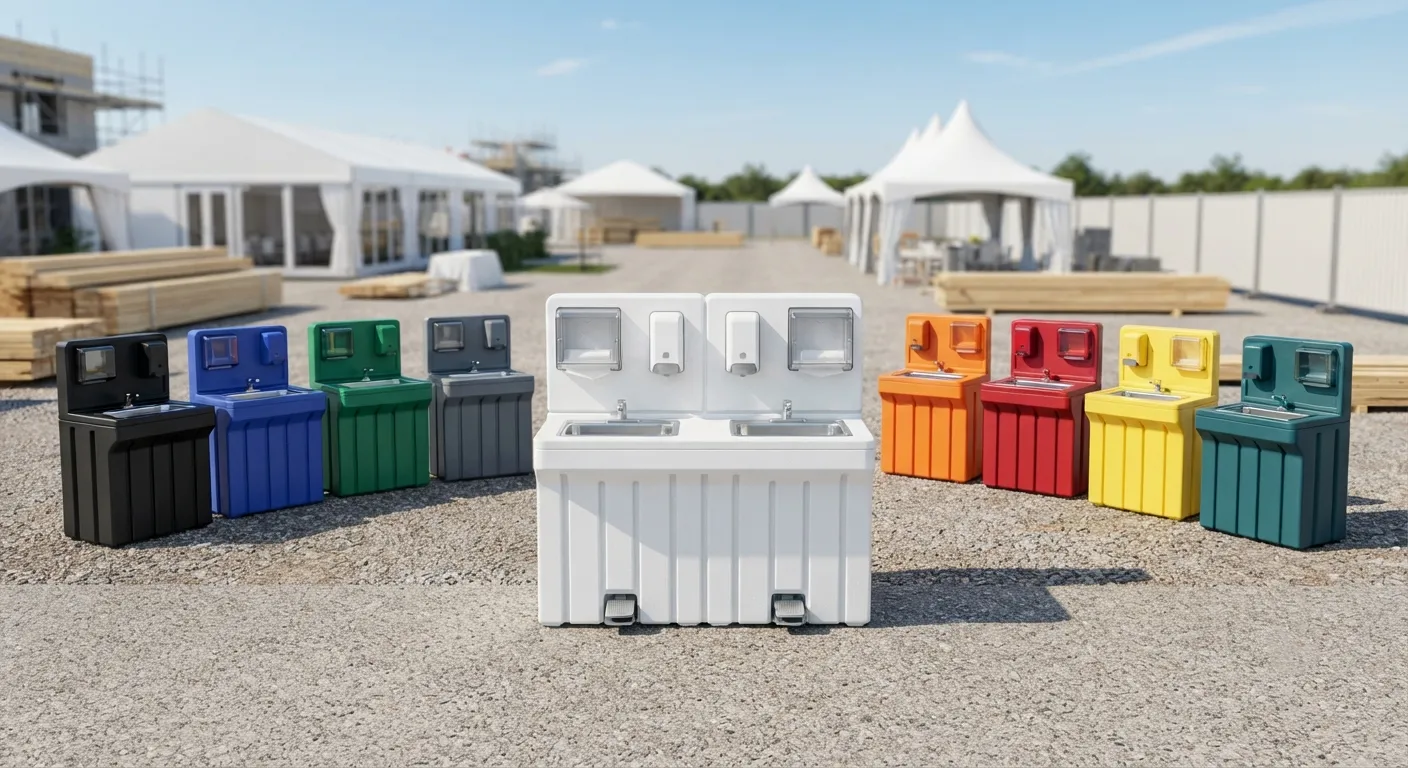
Placement rules follow the same logic across every unit type we run. A storage container rental needs a flat pad and enough clearance for the delivery truck's boom or tilt-bed, similar to dumpster delivery. If a client is asking about mobile office trailer replacement doors, that's a maintenance question rather than a placement one, but door swing does affect where you can park a mobile office trailer against a fence line or building. A restroom trailer rental needs level ground and, for models with plumbing, a water and power hookup nearby, and a luxury restroom trailer or 8 stall restroom trailer needs even more clearance for the tow vehicle to back in straight. Handwashing stations get placed close to food service or paint and coating work; 29 CFR 1910.141(d)(2) requires soap and towels or a hand-drying device at the station, and OSHA 1926.51(f)(1) applies specifically where workers handle paints, coatings, herbicides or insecticides. If a client asks about Ozark River portable sink replacement parts, that's a manufacturer part number question, outside what we stock, so we point people to the manufacturer for that one rather than guess.
Reno Porta Pros placement checklist
| Unit | Ground needed | Clearance needed |
|---|---|---|
| Standard toilet | 44 x 48 inch pad | 36 inch approach path |
| ADA unit | 60 inch turning circle | 32 inch door opening |
| Roll-off dumpster | Flat, load-bearing pad | 60 feet behind truck |
| Restroom trailer | Level, hookup nearby | Truck and towing clearance |
How often does a septic tank or grease trap need pumping near a placed unit?
A typical residential septic tank gets pumped every 3 to 5 years, depending on tank size and household size. A grease interceptor gets pumped once fats, oils, grease and solids reach 25 percent of the liquid depth. If you're near Sparks, 9.2 miles east of Reno, or further out toward Verdi, 9.6 miles west, for septic pumping service, schedule ahead since drive time affects route order, and a look at septic tank pumping cost or how often to pump a septic tank helps plan the visit.
Why does ground slope matter for placement?
A unit set on a slope can tip or drain wrong, and service trucks struggle to level the tank during a pump-out. Flat ground within a few degrees of level is the target. Reno Porta Pros checks this on the pre-delivery site look whenever the job allows it.
Can a porta potty sit on a sidewalk in Reno?
Not without checking first. Sidewalk placement touches the public right of way, and that needs confirming with the city before delivery. We hold the unit at our yard or place it just off the walk on private ground until that approval comes through.
Do ADA units need extra clearance compared to a standard unit?
Yes. ADA units need a 60 inch turning circle under ADA Standards 304.3.1 and a 32 inch clear door opening under section 404.2.3, both wider than what a standard unit needs. That extra footprint has to be planned into the site layout before delivery.
What happens if a placement site turns out to be too small?
We move the unit or split the order across two smaller footprints. It happens more than people expect on tight urban lots in Reno, so a quick site photo before delivery day saves a return trip and keeps the schedule on time.
Next step
Get a delivery date
Tell us the address, the dates and the headcount. We size the order and confirm the route.